VNU University of Law Reviews 10 Years of the Master’s Program in Human Rights Law
VNU University of Law Reviews 10 Years of the Master’s Program in Human Rights Law
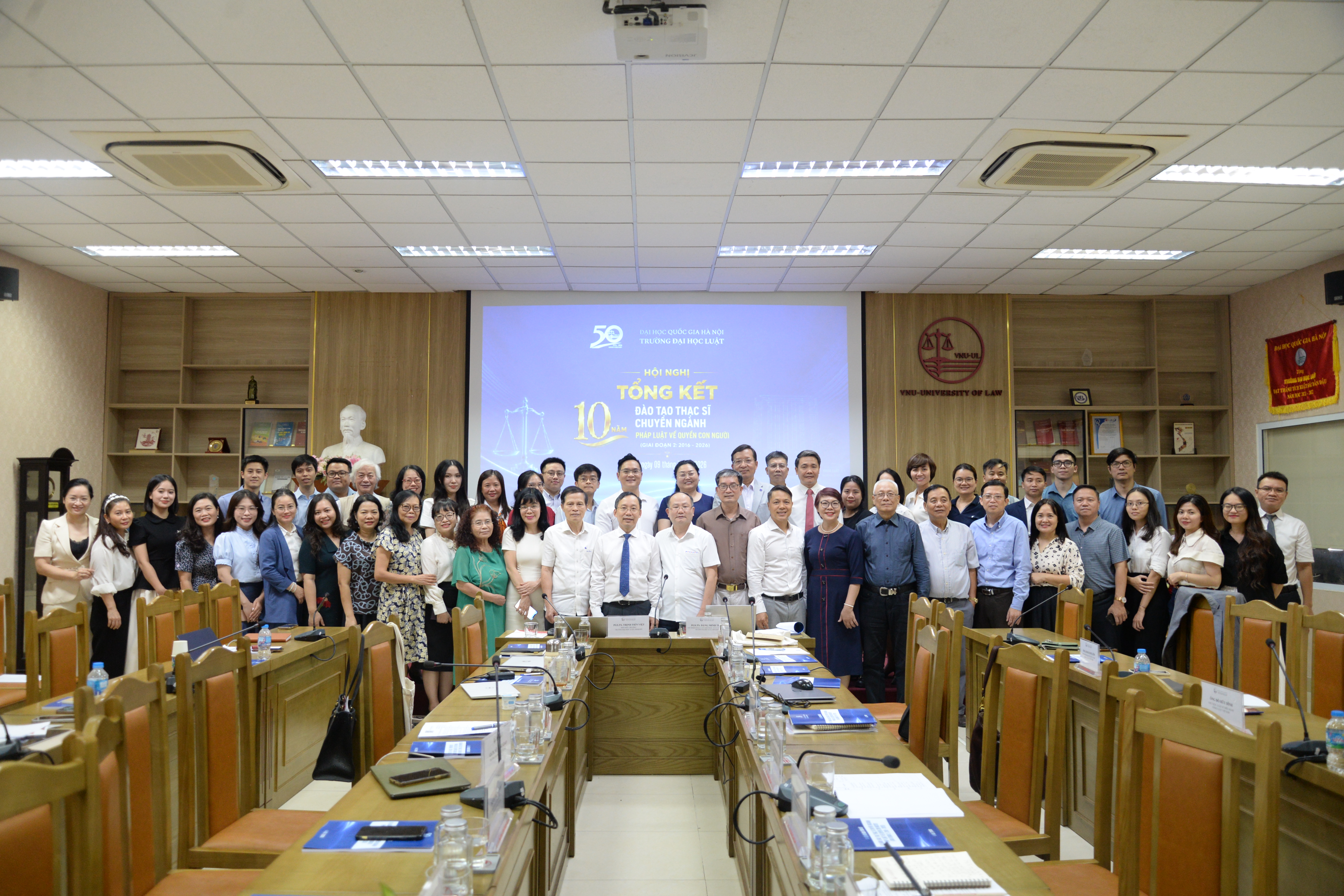
On 9 July 2026, VNU University of Law held the conference “Ten-Year Review of the Master’s Program in Human Rights Law – Phase 2: 2016–2026.” The conference reviewed the program’s development — the first Master’s program of its kind in Vietnamese legal education — and discussed proposed reforms to meet demand for qualified personnel in law and human rights.
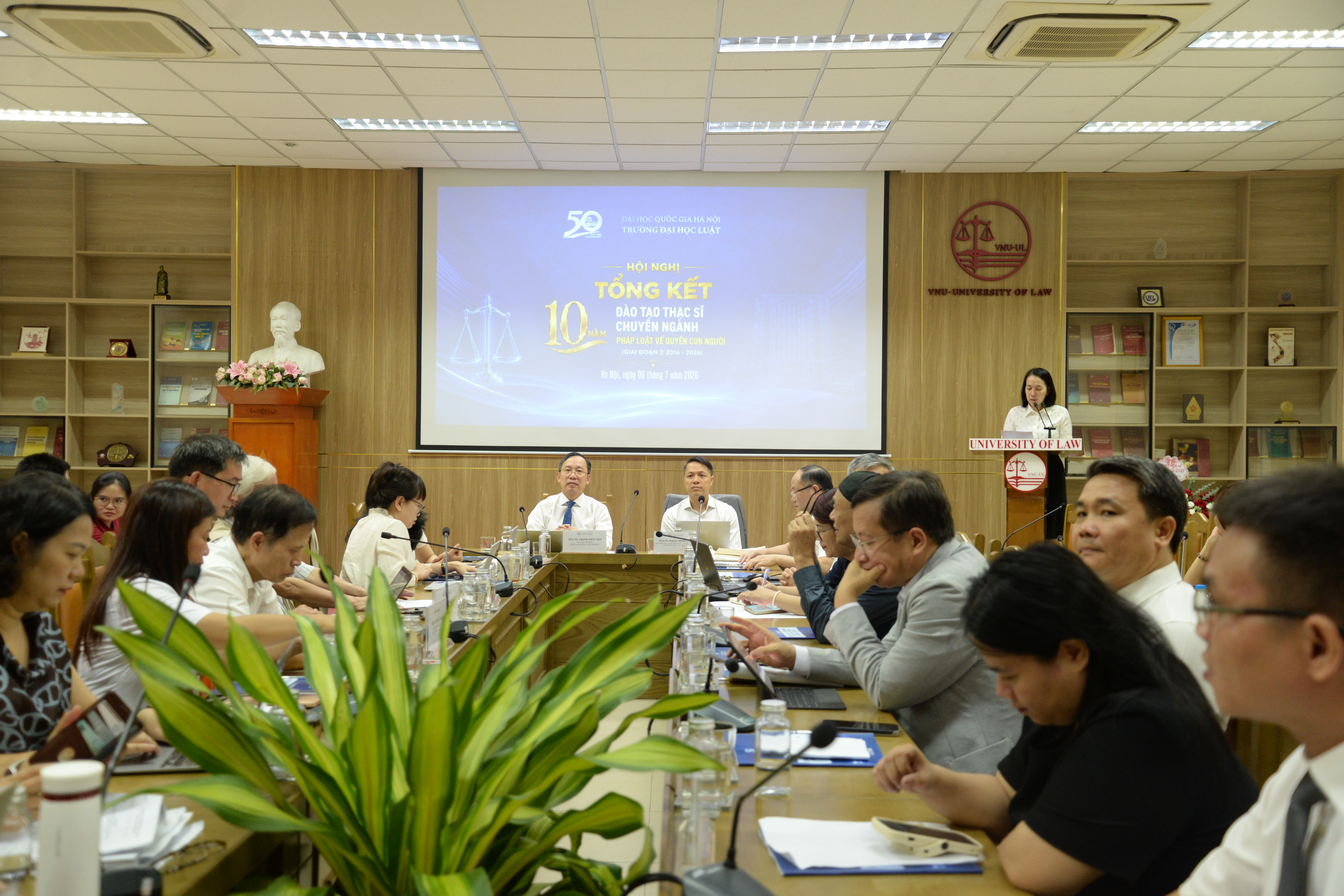
The Master’s Program in Human Rights Law at VNU University of Law began in 2011, the first Master’s program in Vietnam dedicated to law and human rights. Over its 15 years, the program has supplied personnel to Party and State agencies, socio-political organizations, research and training institutions, international organizations, and the private sector.
Attendees included representatives of partner organizations, scholars, practitioners, faculty, and current and former students of the program. From VNU University of Law, attendees included Vice Rectors Assoc. Prof. Dr. Trinh Tien Viet and Assoc. Prof. Dr. Nguyen Hoang Anh, former University leaders, and other professors and researchers.
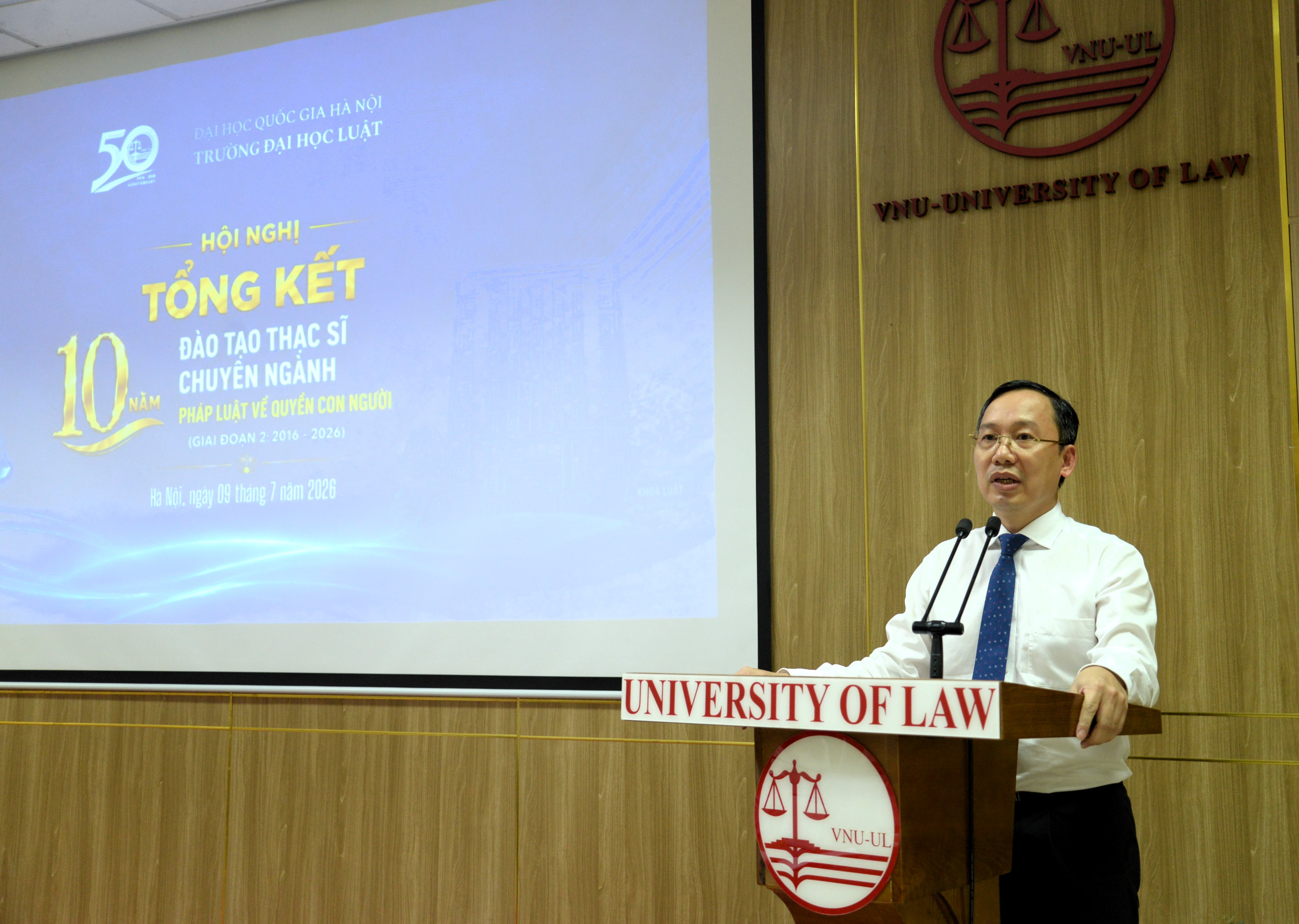
In his opening remarks, Vice Rector Trinh Tien Viet said that human rights education is regarded internationally as a means of building a fair, peaceful, and sustainable society, and that in Vietnam this task is tied to building a socialist rule-of-law state, which places growing demands on training, research, and expert development in human rights law.
In 2017, the program received AUN-QA accreditation, becoming the first Master’s program in Law in Vietnam certified under the ASEAN University Network’s quality assurance standards.
Between 2016 and 2026, the program ran continuously, training 11 cohorts and recruiting its 12th cohort in 2026. It attracted 197 applicants, of whom nearly 150 were admitted, drawn from a range of agencies, organizations, and fields of work.
According to periodic surveys, among the 5 most recent cohorts, 92% of alumni were satisfied with the program’s overall quality, and more than 92% said it equipped them with the skills their jobs required. All employer representatives surveyed (100%) reported that graduates met job performance requirements.
The program takes an interdisciplinary approach, built on a foundation of legal studies and incorporating philosophy, political science, sociology, and history. It was developed drawing on the experience of Master’s programs in human rights at the University of Oslo, Lund University, and Mahidol University, with support from international partners.
Presentations and discussions at the conference focused on three areas: an assessment of the program’s development from 2016 to 2026; identification of reform needs for the current period; and proposals for improving quality and expanding the program’s academic and practical reach.
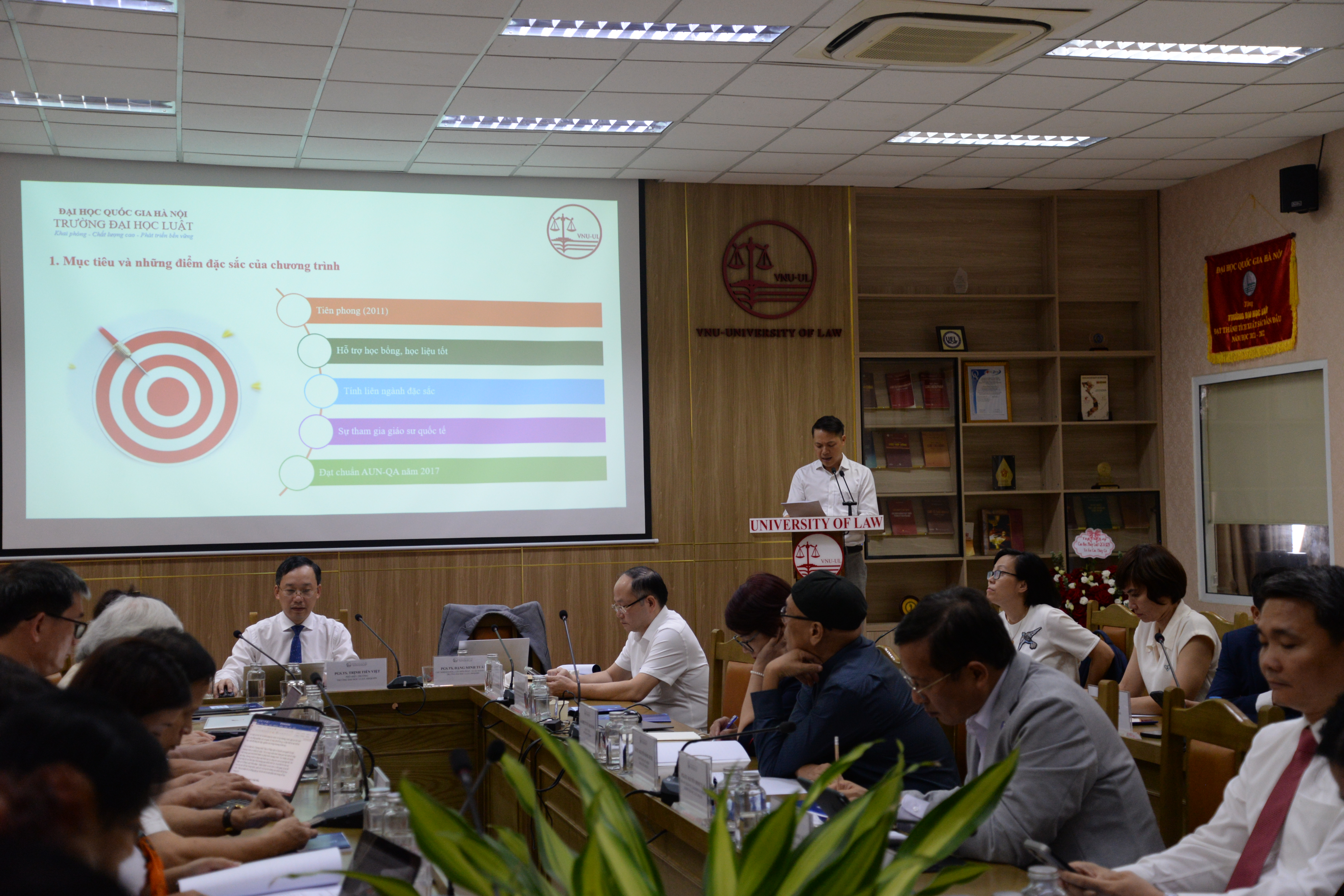
Assoc. Prof. Dr. Dang Minh Tuan, Dean of the Faculty of Constitutional and Administrative Law, presented the ten-year review report. It noted that from the outset, the program took a law-centered approach set within the national context, combined with international and regional standards and Vietnam’s own experience in protecting human rights, providing an academic foundation tied to the practical requirements of building a socialist rule-of-law state in Vietnam.
The conference examined the program’s interdisciplinary character in more depth. Alongside its legal foundation, the program incorporates philosophy, political science, sociology, history, and psychology, framing human rights not only as a body of legal norms but also as a field connected to intellectual history, political institutions, social movements, and sustainable development. This distinguishes it from more traditional law programs and is intended to build students’ capacity for policy analysis, critical thinking, and handling complex legal and social issues.
The curriculum totals 60 credits, comprising general knowledge, foundation and major coursework, and a research and thesis component. It progresses from theoretical foundations to international standards and mechanisms, and from specific rights and subject groups to Vietnam’s legal framework and mechanisms for protecting and promoting human rights. This structure is intended to help students apply theoretical knowledge to research, policy consultation, professional practice, and legislative proposals.
Presentations also addressed the case for updating the program to reflect current issues, including digital transformation, artificial intelligence, good governance, the environment, sustainable development, personal data protection, the rights of vulnerable groups, and legal challenges arising from globalization. Several speakers argued that this requires new teaching approaches equipping students to identify, analyze, and address human rights issues arising from these developments.
Discussions also addressed the balance between research-oriented training and practical experience. As a research-oriented Master’s program, it has provided students with an academic foundation; going forward, participants suggested expanding seminars, workshops, internships, field visits, and connections with state agencies, international organizations, civil society groups, research institutions, and employers, to help students better understand the application of human rights knowledge in lawmaking, policy implementation, public administration, the judiciary, legal aid, and community development.
Presentations also discussed workforce development amid globalization, noting that graduates need both international and Vietnamese human rights law expertise, along with foreign language proficiency, independent research skills, policy analysis skills, and the ability to work in multidisciplinary, multicultural environments.
Alumni speakers noted that the program’s value lay not only in its academic content but also in the mix of students from different professional backgrounds, which allowed theory to be tested against practical experience and legal issues to be examined from multiple professional perspectives.
The conference also identified challenges facing the program: the need to standardize and update teaching materials; expand specialized materials in Vietnamese; strengthen students’ academic foreign language skills; expand opportunities for practice, research, and publication; and improve outreach so prospective students better understand the career value of human rights law.
Going forward, VNU University of Law plans to develop the program into an academic, research, and policy advisory center on human rights law within Vietnam National University, Hanoi. Planned steps include updating the program’s content and structure; developing new courses on human rights and the environment, good governance, and human rights and digital technology; expanding its interdisciplinary approach; standardizing teaching materials; and strengthening international cooperation, including faculty and student exchanges, internships, and joint research.