

Workshop: “Current Status and Solutions for Improving Civil and Economic Law in the New Era”
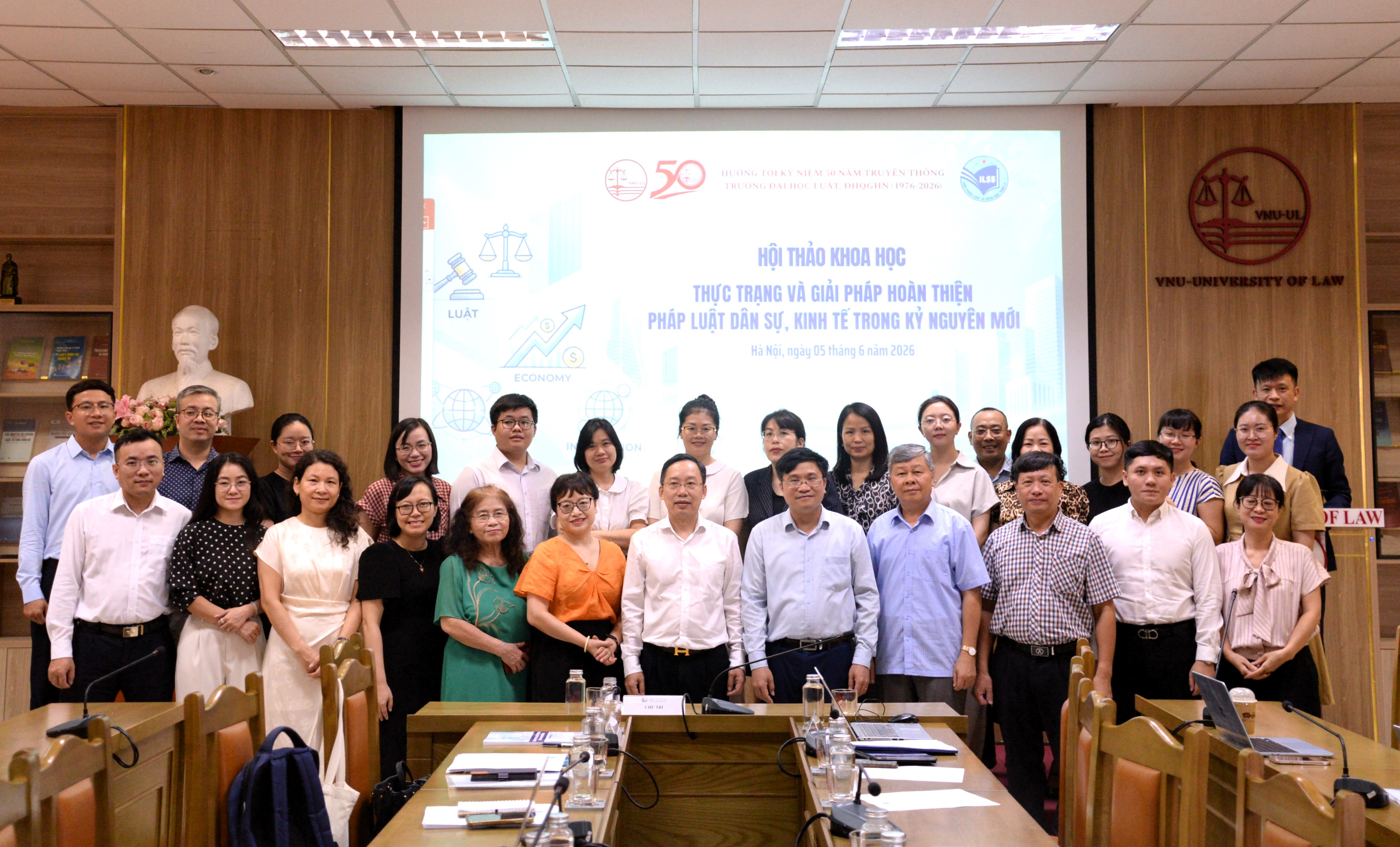
The workshop “Current Status and Solutions for Improving Civil and Economic Law in the New Era” took place successfully on 5 June 2026. It was the third in a series of in-depth policy consultation workshops organized by VNU University of Law together with the Institute of Legal Strategy and Science, Ministry of Justice, to support the development of the strategic project “Strategy for Improving Vietnam’s Legal System in the New Era.”
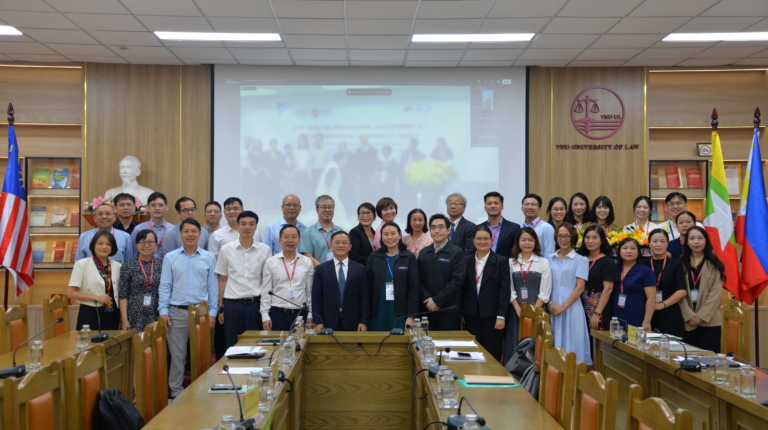
The workshop was held both in person and online, drawing a large number of leading experts, scholars, lecturers and researchers from law training and research institutions across the country.
Shifting legislative thinking: from “reactive” to “development-enabling”
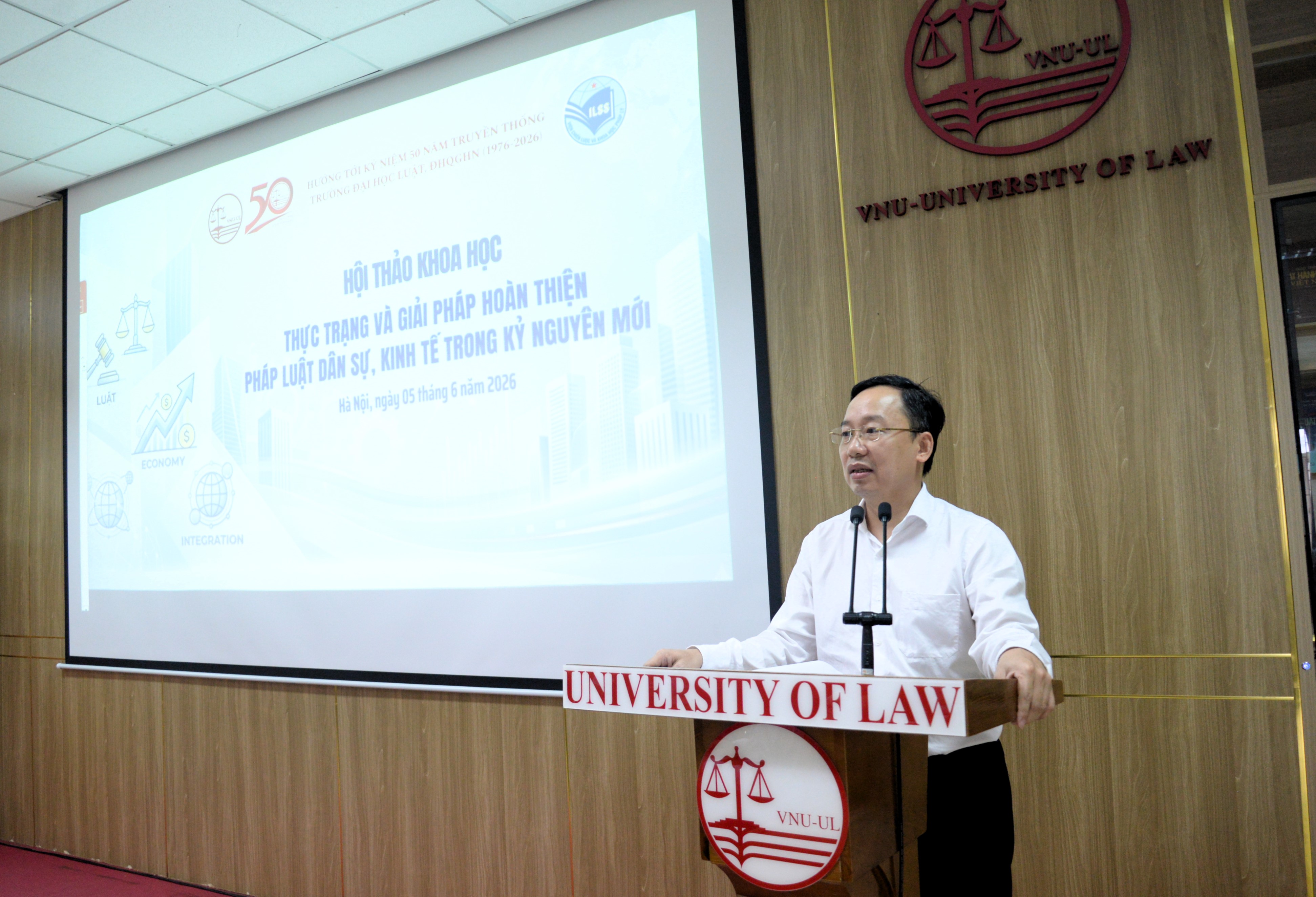
In his opening and introductory remarks, Assoc. Prof. Dr. Trinh Tien Viet, Vice Rector of VNU University of Law, said Vietnam is entering a new period of development, in which science and technology, digital transformation, artificial intelligence, big data and new business models are fundamentally changing economic and social life. Against this backdrop, the traditional legal framework is showing major gaps in the face of new types of assets and transactions.
“The issue today is not only amending or adding specific provisions, but more fundamentally rethinking how law is made — shifting from a reactive approach to one that enables development, with people and businesses at the center, innovation as the driving force, and effective implementation as the measure of a legal system’s quality,” Dr. Trinh Tien Viet said.
He added that the system of civil and economic law in the new era needs to become an effective tool for promoting innovation, guaranteeing freedom of business, and strengthening national competitiveness, while balancing individual freedom with community interests, protecting vulnerable groups, and protecting personal data.
Presentations in detail
The workshop featured six papers across two open discussion sessions, examining what the new era requires for improving several core areas of civil and economic law.
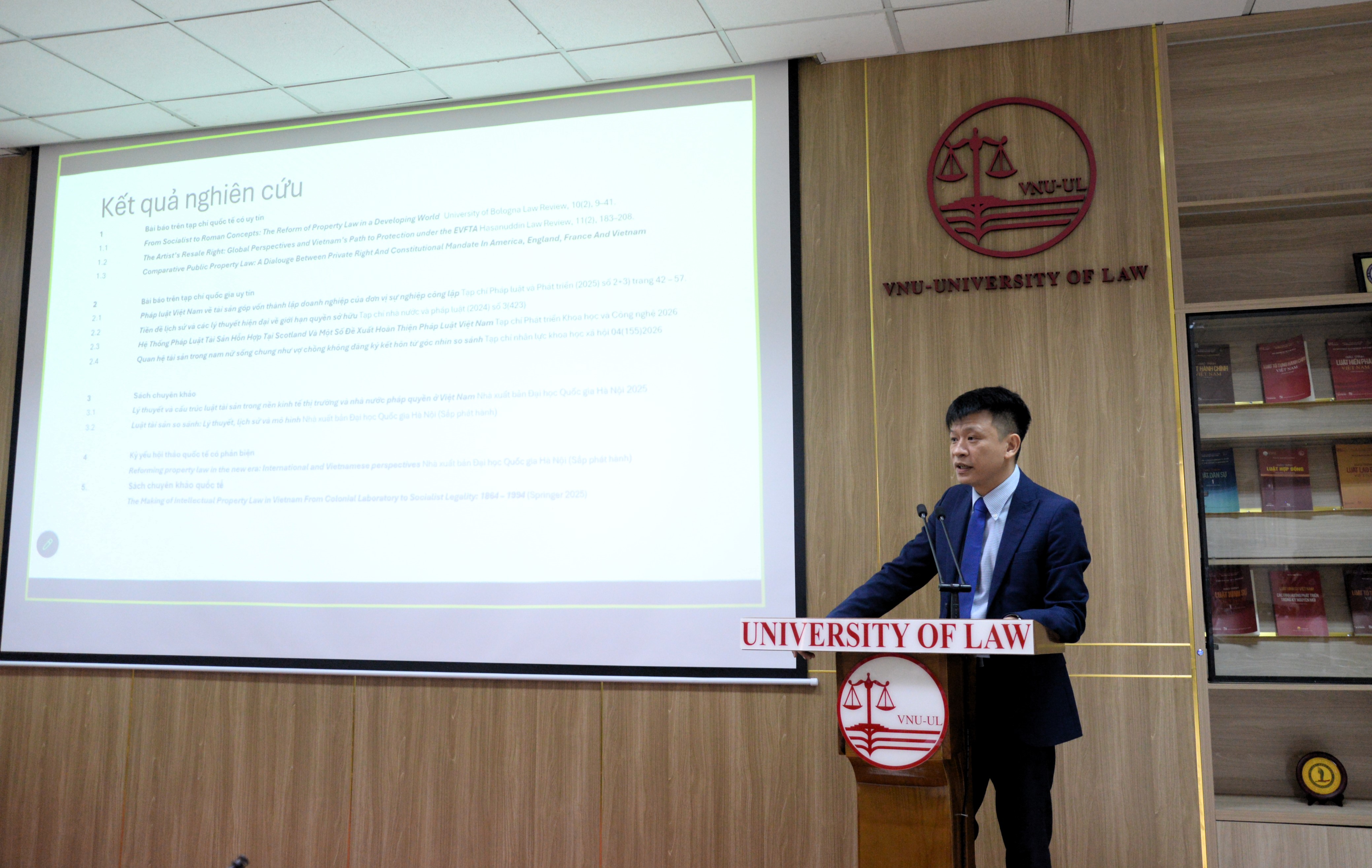
On property law, Assoc. Prof. Dr. Tran Kien presented “Current Status and Solutions for Improving Property Law in the New Era.” The paper examined the relationship between property law, the rule of law, and the effective functioning of a market economy amid globalization and digital transformation. It found that while a development-enabling approach allows a country to respond quickly to new economic trends, it also carries risks to the quality and stability of legal rules and can conflict with traditional positive-law thinking. The paper recommended a detailed analysis of each economic model to produce coherent regulatory solutions that balance legal stability with the specific needs of Vietnam’s market economy.
On intellectual property and competition law, Assoc. Prof. Dr. Nguyen Thi Que Anh, a Meritorious Teacher, presented “Improving the Legal Framework on Intellectual Property and Competition to Control the Abuse of Intellectual Property Rights in the Digital Era.” The paper examined the interaction between intellectual property law and competition law, identified new challenges arising from the abuse of intellectual property rights in the digital economy, assessed the compatibility of the current legal system, and proposed recommendations for a multidimensional legal framework in which intellectual property law drives innovation while competition law sets the regulatory limits needed to keep intellectual assets functioning as a driver of sustainable development rather than a barrier to it. Building on this, Dr. Tran Anh Tu presented “Current Status and Solutions for Improving Vietnam’s Competition Law in the Digital Economy,” identifying and analyzing the challenges facing Vietnamese competition law in the digital economy, assessing the current legal framework, and suggesting directions for reform.
On financial and banking law, Assoc. Prof. Dr. Le Thi Thu Thuy and Tran Thi An Tue, a PhD candidate, presented “Current Status and Solutions for Improving Financial and Banking Law in the New Era,” examining the field amid the rapid growth of digital transformation and international integration. The paper found that the current legal framework has provided a stable basis for the financial market and for credit institutions to operate safely, but that it shows significant gaps and bottlenecks in the face of new business models such as fintech, digital banking and digital assets. It also noted that regulations on user data protection and cybersecurity remain incomplete, creating systemic risk, and proposed a set of forward-looking solutions to strengthen the legal framework for managing high-tech risk and to promote green and inclusive finance.
On personal data protection law, Dr. Nguyen Thi Phuong Cham examined the theoretical foundations of personal data protection law, assessed Vietnam’s 2025 Law on Personal Data Protection against these theoretical standards, identified new challenges arising from AI and big data, and proposed solutions along a risk-based approach, including stronger independent oversight, higher technical standards, greater transparency and expanded international cooperation, in order to balance innovation and economic growth with the protection of data subjects’ rights in the digital era. Her paper was titled “Current Status and Solutions for Improving Personal Data Protection Law in the New Era.”
Closing the presentations, Assoc. Prof. Dr. Nguyen Bich Thao and Dr. Ngo Thanh Huong presented “Current Status and Solutions for Improving Civil Procedure Law in the New Era.” The paper analyzed what the new era requires of civil procedure law, outlined recent reform trends in civil procedure in several countries, assessed Vietnam’s current civil procedure law, and proposed directions for reform focused on: preserving the adversarial principle while applying it flexibly; digital proceedings and evidence generated by artificial intelligence; diversifying procedures to ensure proportionality and efficiency; designing flexible procedures that support innovation and private-sector development; and considering a representative litigation mechanism to help advance sustainable development goals.
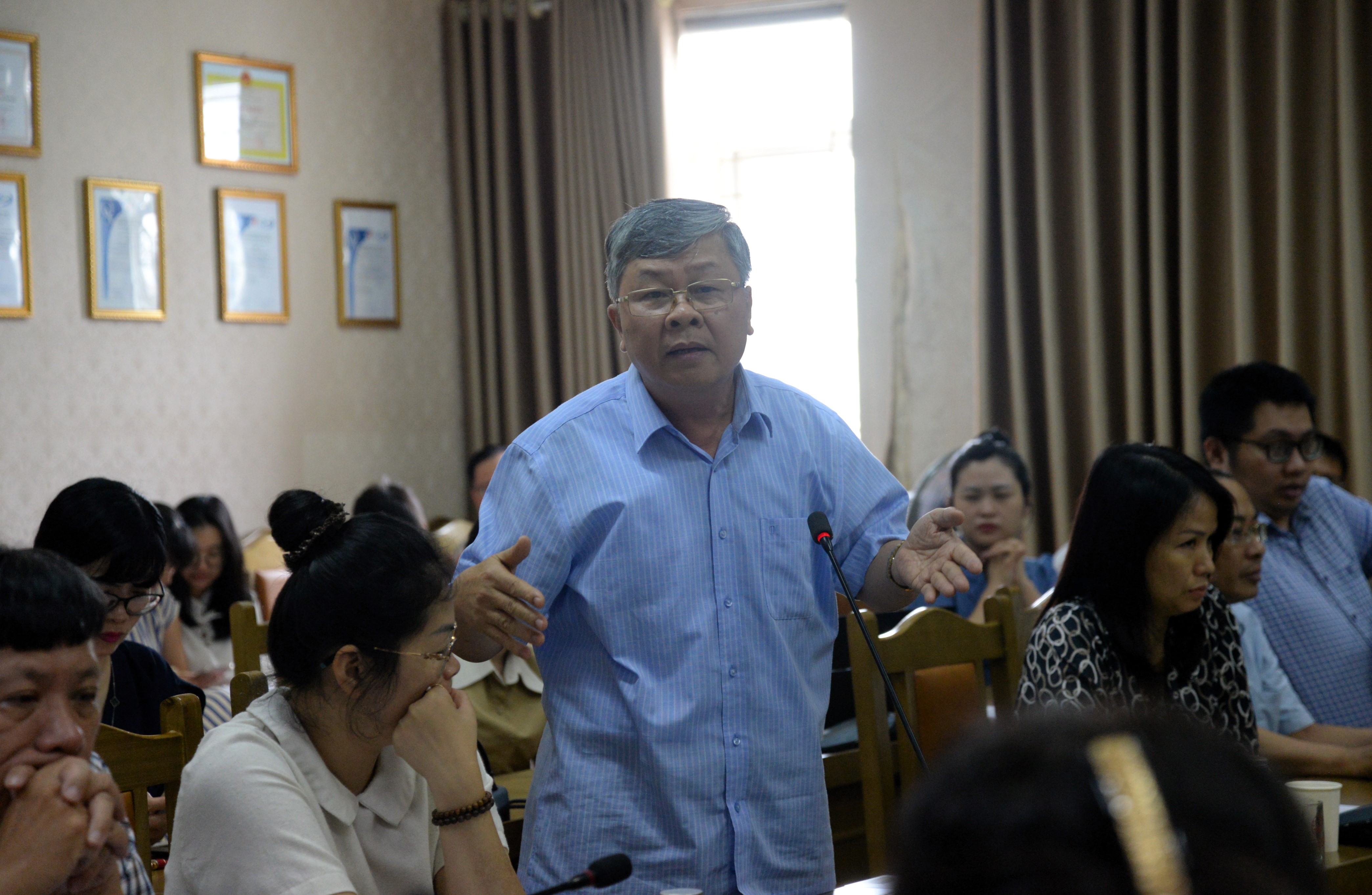
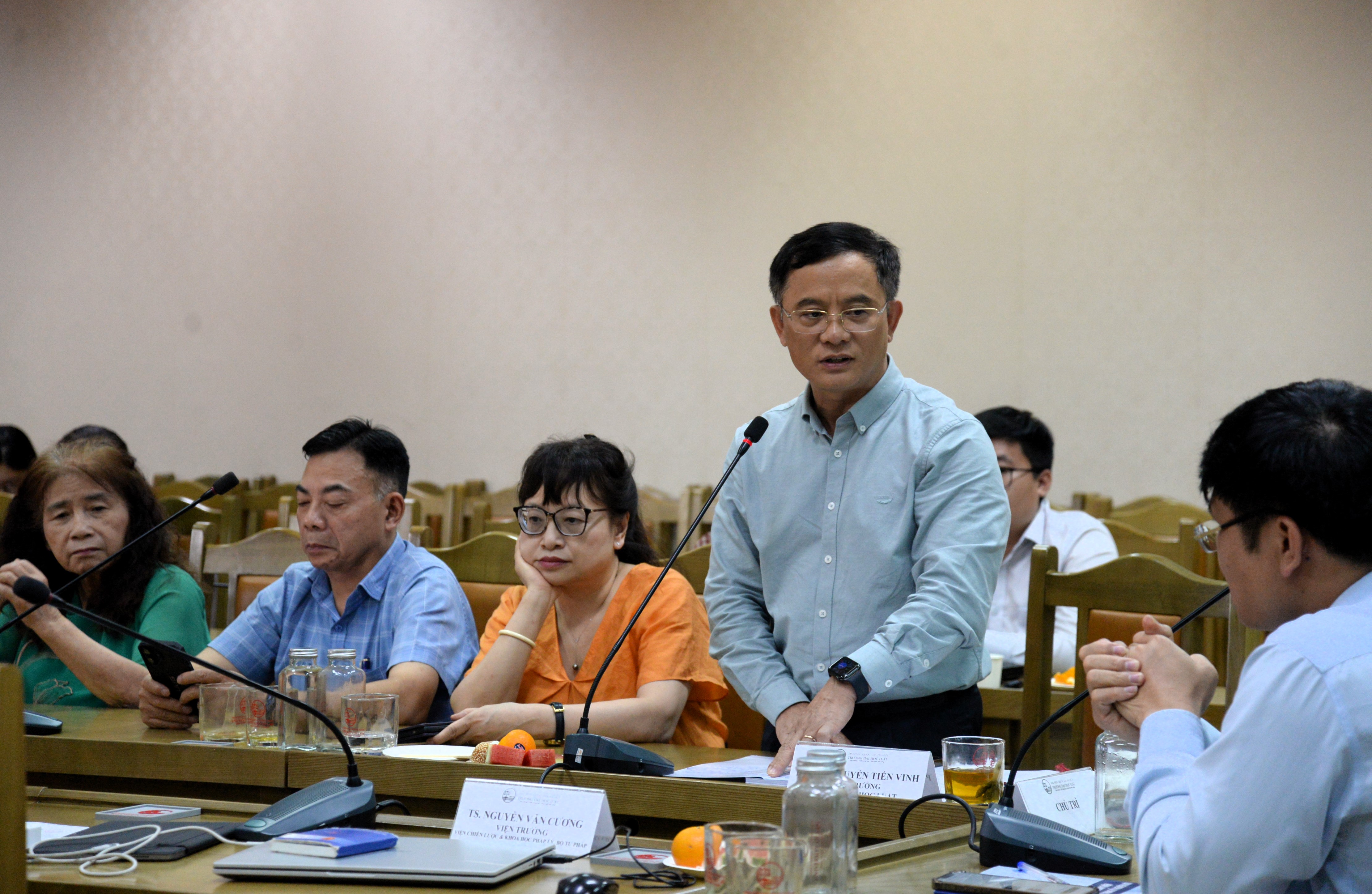
The discussion sessions were lively. Participants identified the legal challenges posed by the new era and agreed on the need to shift legislative thinking in civil and economic law from a state-management and control model to one centered on enabling development, and on the need to properly balance general and specialized law, public and private law, and hard and soft law. In his closing remarks, Dr. Nguyen Van Cuong praised the thorough preparation VNU University of Law had put into the workshop, noting its academic rigor and innovative research thinking.
The successful workshop reflects VNU University of Law’s tradition of open academic inquiry and its sense of social responsibility over 50 years of establishment and development. The University continues to strengthen its position as a research-oriented institution and a leader in policy advisory work and legal knowledge transfer in Vietnam.
Following the workshop series, VNU University of Law will compile the papers and expert input into three policy advisory reports to be submitted to the Institute of Legal Strategy and Science, Ministry of Justice. These reports are intended to provide scientific and practical grounds contributing to the development of the project “Strategy for Improving Vietnam’s Legal System in the New Era.”