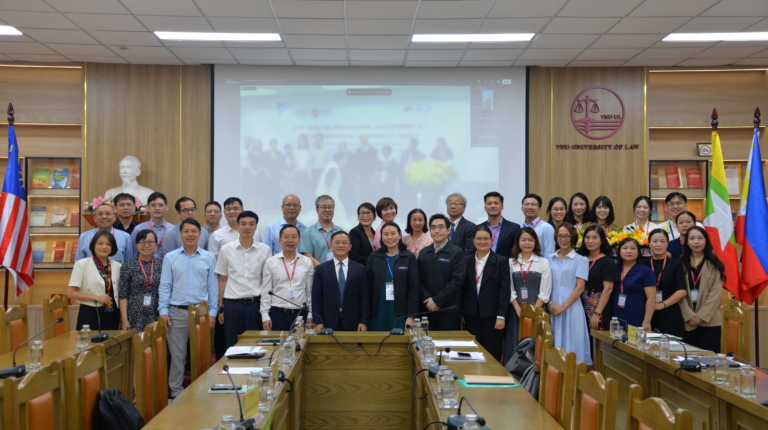


On the afternoon of 15 August 2025, VNU University of Law held the closing session of the 5th Vietnam Autumn Legal Forum (VALF 5), concluding two consecutive days of sessions (14–15 August 2025) with results across academic research, policy and international cooperation.
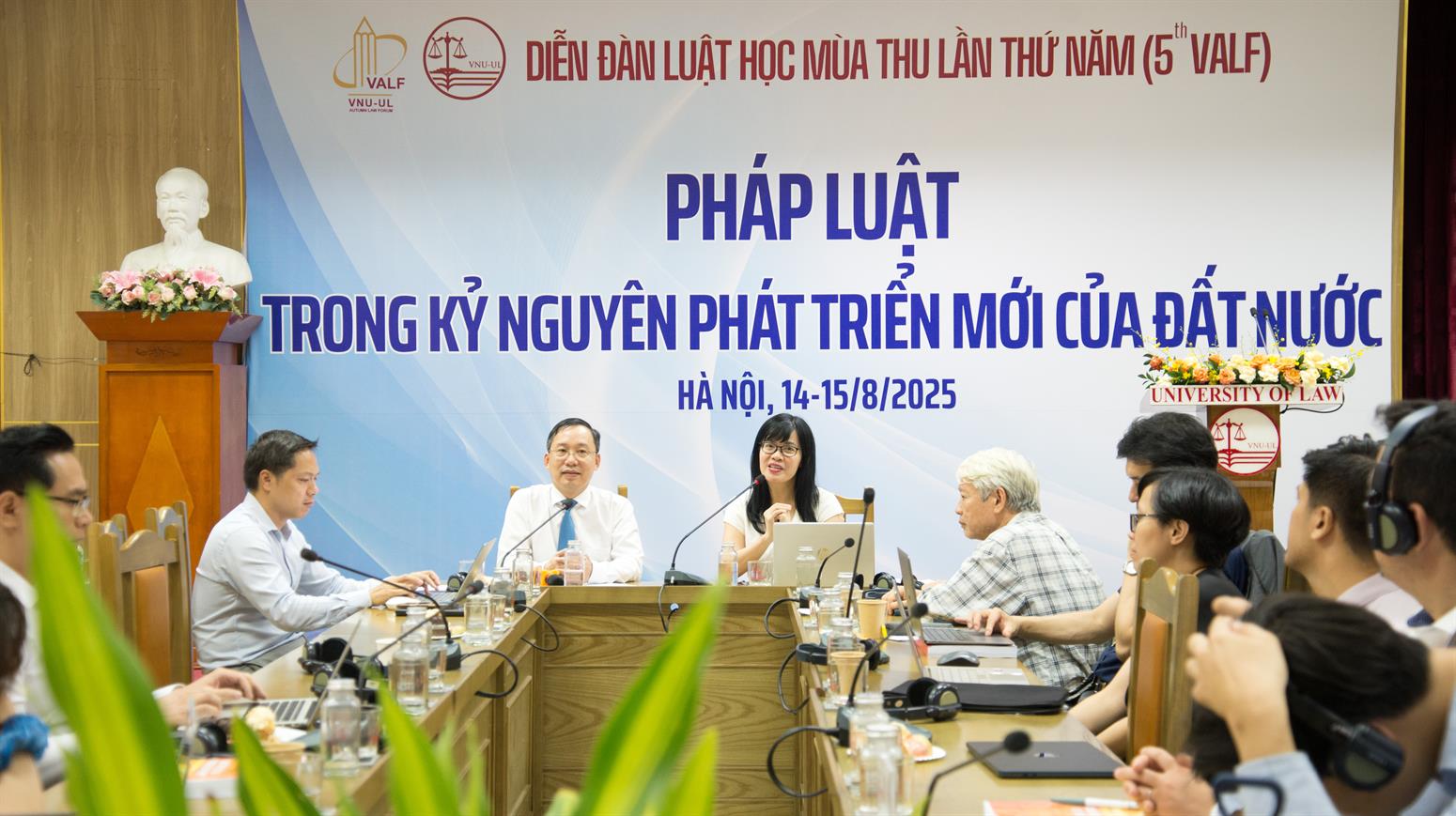
VALF 5 drew hundreds of scholars, experts, lawyers, judges and administrators from Vietnam and abroad, and comprised three component workshops, each addressing a key topic reflecting theoretical and practical challenges arising in an era of international integration, artificial intelligence and digital transformation.
Workshop 1 (14 August 2025): Legal Reasoning in the Age of Artificial Intelligence
The workshop brought together professors from the University of Washington School of Law (United States), along with scholars, judges, lawyers and technology experts from Vietnam.
Academic contributions and findings:
- The rapid development of AI requires rethinking the skills needed in legal practice, from the legal reasoning of judges and lawyers to legal education in the digital era.
- AI has clear limits: it can excel at data analysis and case-law research but cannot replace human judgment on ethical standards and social context.
- Legal education needs to add skills for critically assessing and overseeing AI, while continuing to strengthen critical thinking, professional ethics and humanistic values.
- The discussion pointed to comparative research across legal systems on the use of AI in legal practice.
The workshop was described as an initial step toward a sustained international academic network on law and technology between VNU University of Law and law schools abroad.
Workshop 2 (15 August 2025): National Governance in the New Era
The central component of the Forum, this workshop was organized by VNU University of Law together with VNU Vietnam Japan University, as part of the 7th International Conference on Vietnamese Studies. It drew international scholars from Singapore, Japan and Italy, alongside leading experts from Vietnam.
Academic and policy contributions:
- Participants outlined a comprehensive approach to national governance, spanning theory and practice, from institutional reform to decentralization and digital transformation.
- Institutional reform was described not only as a strategic priority but as a necessary condition for Vietnam to escape the middle-income trap and pursue sustainable development.
- Proposed directions included shifting from administrative management to modern national governance, building digital governance grounded in the rule of law, and combining “hard law” with “soft law” (culture, ethics and tradition) in regulating society.
- The discussion examined the role of private businesses and civil society, alongside the state, as co-creators of value in national governance.
The workshop’s outputs include a conference proceedings volume and a policy proposal on reforming national governance, to be submitted to Party and State agencies to inform policymaking.
Workshop 3 (15 August 2025): A Legal Framework to Support Private-Sector Development in Vietnam’s New Era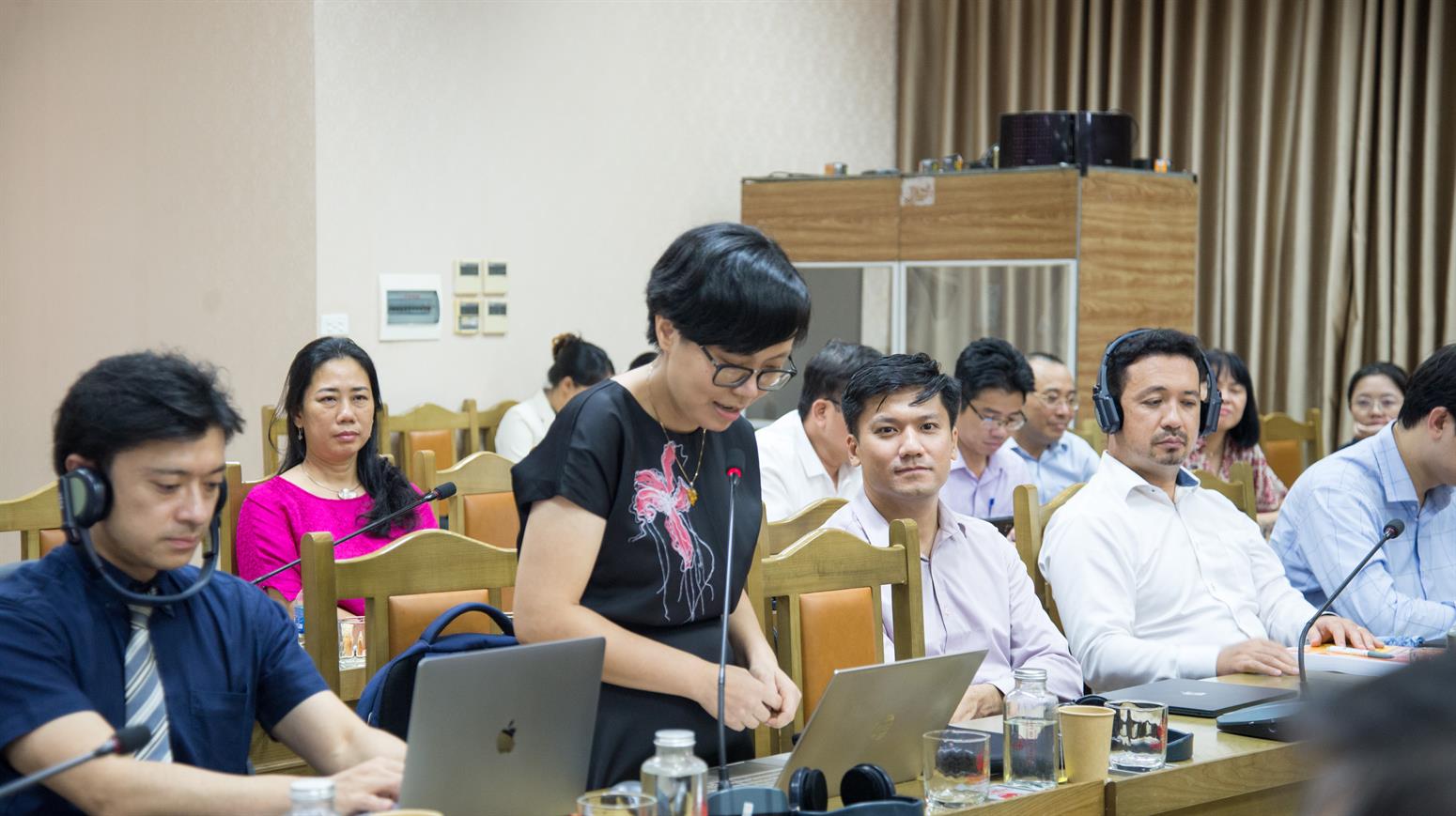
Co-organized by the Faculty of Private Law and the Faculty of International Law, this workshop drew more than 40 abstracts and 30 full papers, with 10 selected papers presented and discussed.
Academic contributions and policy recommendations:
- Participants identified legal barriers holding back the private sector, including difficulty accessing land and credit, inconsistencies among specialized laws, and shortcomings in bankruptcy and commercial arbitration law.
- Proposals included reducing compliance costs for small and medium-sized enterprises, adding competition rules for the digital economy, and aligning Vietnamese law with international arbitration standards.
- The workshop also discussed models for sustainable private-sector development, including incentives for renewable energy investment, support for green transition, and coordination across law, governance, finance, technology and education.
Participants said that for the private sector to become a genuine strategic driver of the economy, Vietnam needs to reform its legal framework in a way that upholds market principles while remaining suited to the country’s specific cultural and social context.
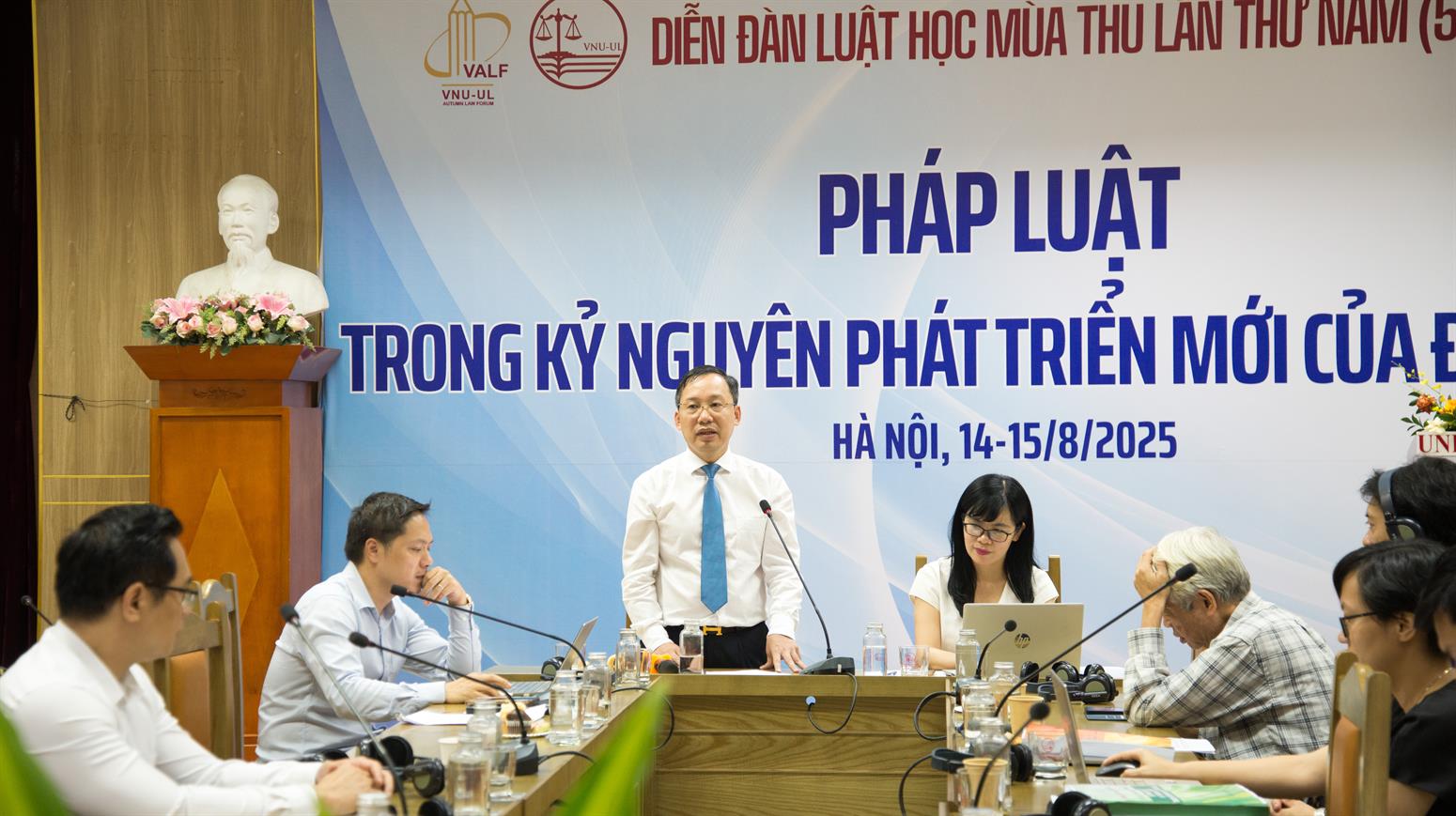 VALF 5 in Review
Through three full-day workshops, VALF 5:
- created an international academic space connecting theory with practice and law with governance;
- contributed new scientific grounds for institutional reform, national governance and private-sector law;
- helped shape policy directions relevant to international integration, digital transformation and artificial intelligence; and
- expanded research, training and policy advisory cooperation between VNU University of Law and law schools in Vietnam and abroad.
In his closing remarks, Assoc. Prof. Dr. Trinh Tien Viet said:
“The 5th Vietnam Autumn Legal Forum has concluded successfully, reflecting VNU University of Law’s leading role in legal research and policy advisory work. The academic results and policy recommendations from the Forum will continue to support the building of the rule-of-law state, the reform of national governance, and Vietnam’s sustainable development in an era of integration and artificial intelligence.”