

VNU University of Law Reviews 8 Years of the Master’s Program in State Governance and Anti-Corruption
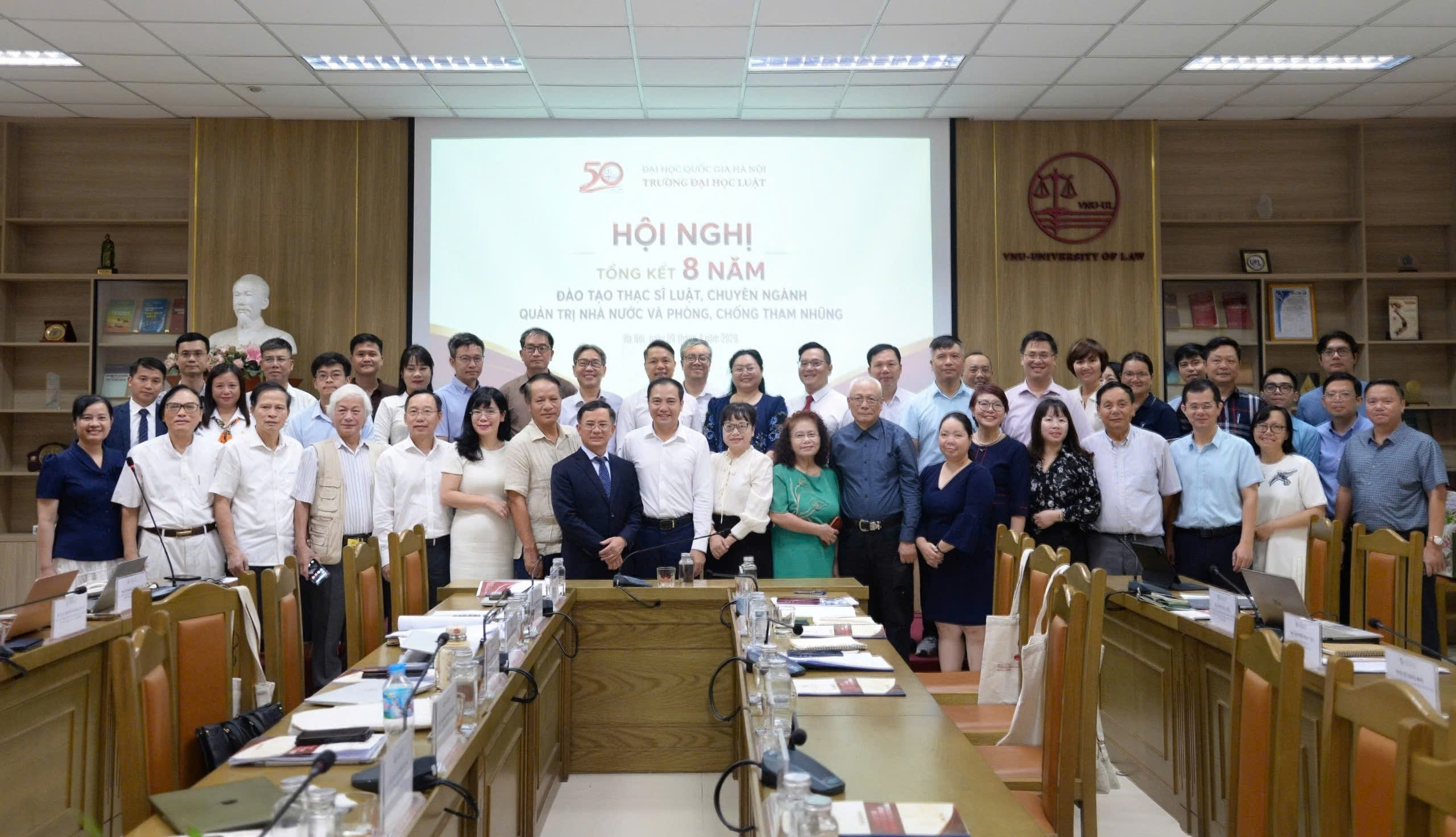
On 9 July 2026, VNU University of Law held a conference reviewing 8 years of the Master’s Program in State Governance and Anti-Corruption. The conference reviewed the program’s results since its launch, acknowledged the contributions of partner agencies, faculty, researchers, and students, and set out directions for the program’s further development.
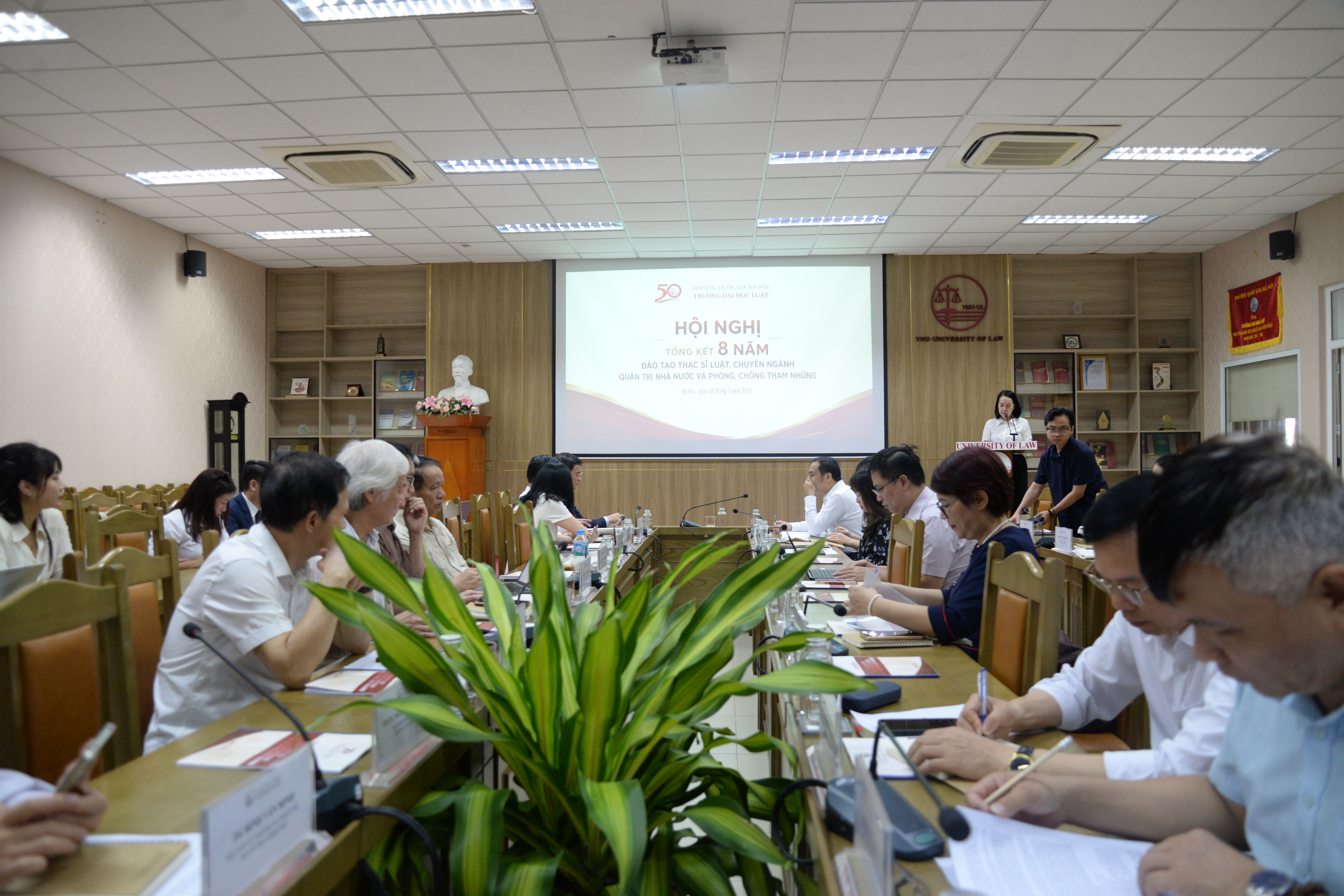
Attendees included representatives of Vietnam National University, Hanoi (VNU), the Central Internal Affairs Commission, partner agencies and organizations, scholars, practitioners, faculty, and current and former students. From VNU: Assoc. Prof. Dr. Dao Thanh Truong, Vice President of VNU; Assoc. Prof. Dr. Nguyen Anh Tuan, Head of the Training and Student Affairs Board; Dr. Nguyen Trung Hien, Deputy Head of the Cooperation and Development Board; and Dr. Bui Vu Anh, Deputy Director of the Institute of Digital Training and Testing. From VNU University of Law: Rector Assoc. Prof. Dr. Nguyen Tien Vinh, Vice Rectors, former University leaders, and other professors and researchers.
The first program of its kind in state governance and anti-corruption
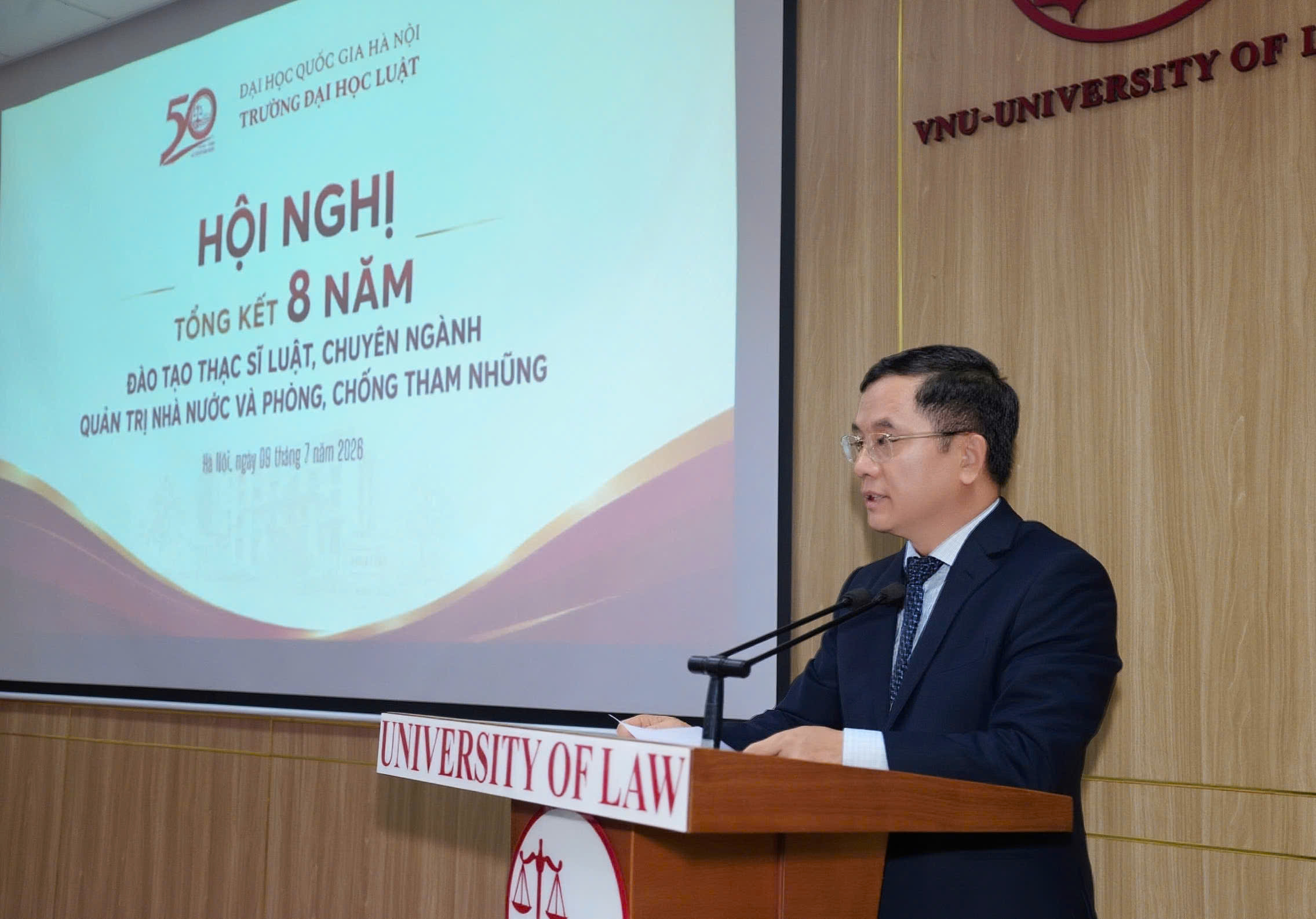
In his opening remarks, Rector Nguyen Tien Vinh said the review came as Vietnam faces growing demands to reform state governance, build the rule-of-law state, control the exercise of power, increase transparency in public administration, and strengthen anti-corruption work.
After 8 years, the program remains the first and only Master’s program in Vietnam dedicated to this field. It has supplied personnel to Party and State agencies, judicial bodies, socio-political organizations, and research and training institutions.
Between 2018 and 2026, the program recruited 8 consecutive cohorts, admitting 161 students in total. Enrollment has grown in recent years: the first cohort in 2018 had 13 students; by 2023, this rose to 37; and in 2025 the program received 52 applications, the highest since its launch.
According to Rector Nguyen Tien Vinh, internationalization will be a key focus for the program going forward. Building on the past 8 years, the University plans to prepare the conditions needed to eventually offer the program at the doctoral level, and to build a combined training, research, and policy advisory framework on state governance, power control, public integrity, and anti-corruption.
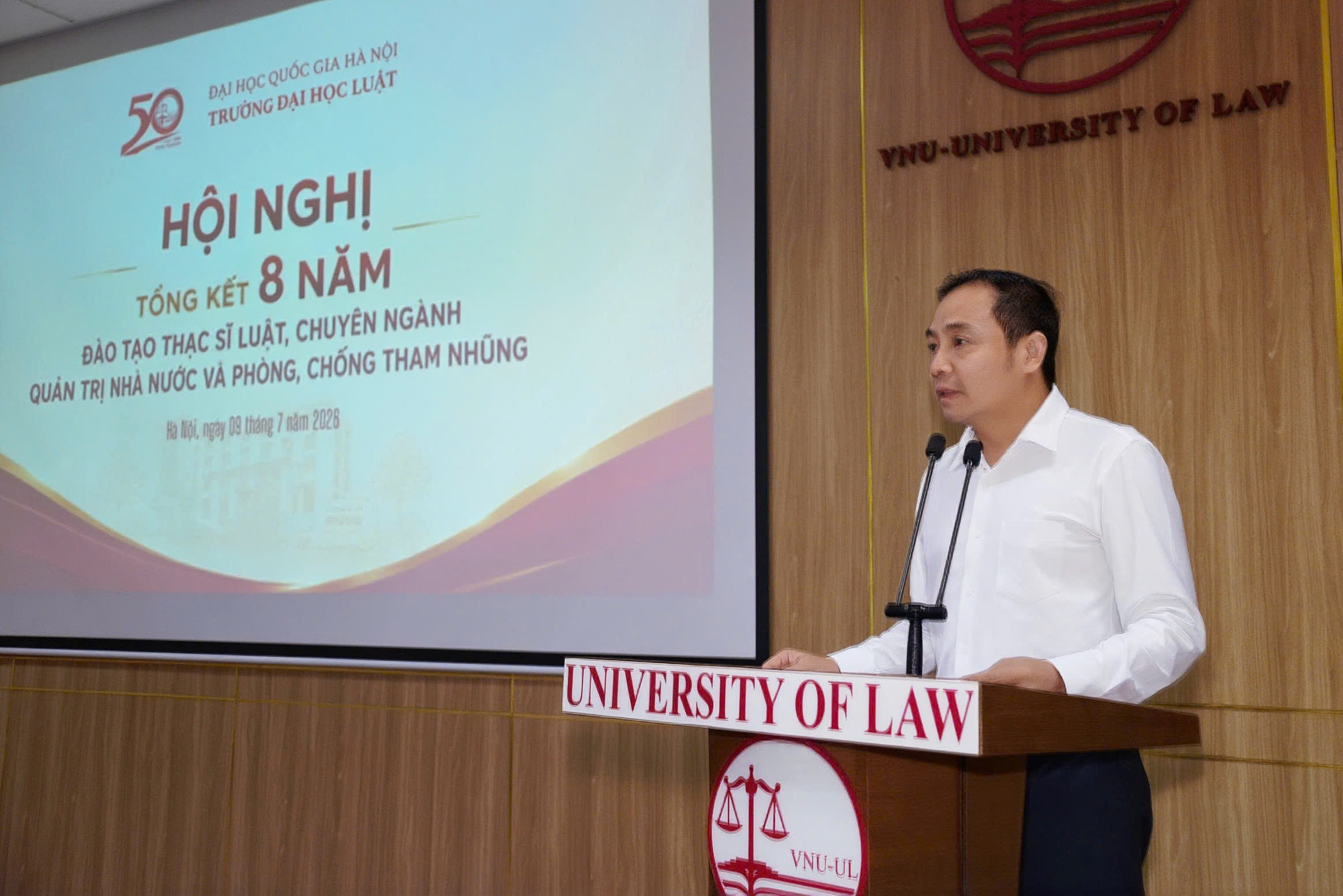
In his remarks, VNU Vice President Dao Thanh Truong acknowledged the results achieved by the University and the program, offered recommendations on its future development, and stated VNU’s commitment to supporting the program going forward. He said that as Vietnam enters a new period of development, the demands of reforming state governance, building the rule-of-law state, and digital transformation are increasing, making the training of qualified personnel in state governance and anti-corruption a priority. He described the program as a pioneering model, developed from practical needs, with an interdisciplinary and internationally engaged approach connected to research and policy work.
VNU also recommended that the program keep pace with emerging trends in modern state governance, including digital transformation, artificial intelligence, data, smart governance, and public integrity, and further internationalize while strengthening links between training, research, policy consultation, and the practical needs of Party and State agencies, localities, businesses, and international organizations. VNU stated it will continue to support VNU University of Law in developing the program, including helping the University complete the requirements to formally register the program with the competent authorities.
At the conference, Assoc. Prof. Dr. Nguyen Minh Tuan presented the 8-year review report; Assoc. Prof. Dr. Nguyen Hoang Anh presented on the program’s pioneering, interdisciplinary, and international character; Do Huu Dinh (MA), representing alumni, presented on the learning environment; and Assoc. Prof. Dr. Truong Thi Hong Ha, representing employers, presented on workforce development in the field.
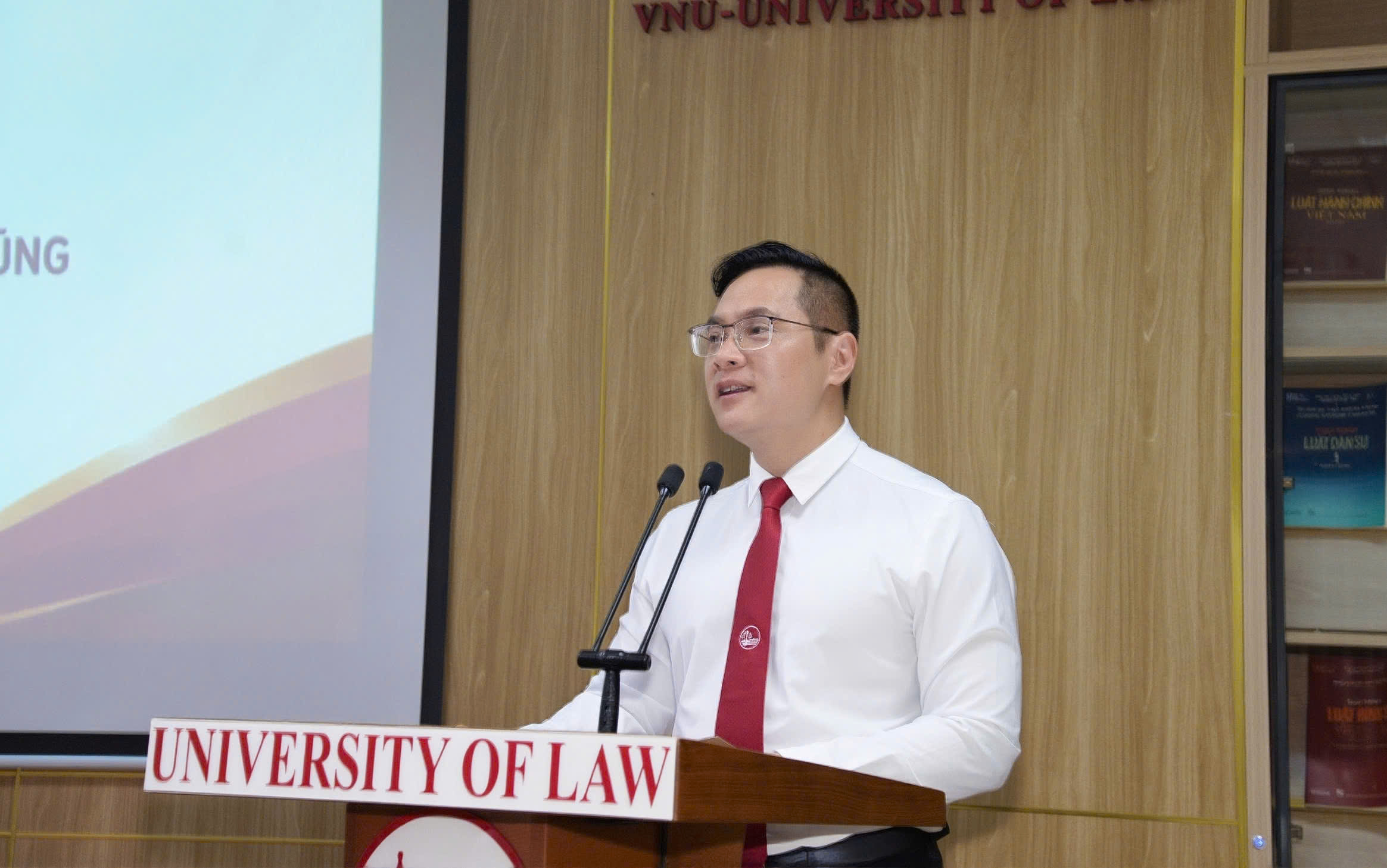 In his report, Assoc. Prof. Dr. Nguyen Minh Tuan outlined the program’s history, noting it remains the only Master’s program in Vietnam specializing in state governance and anti-corruption. The program is built on a legal studies foundation and incorporates political science, management science, public administration, and security studies. Its curriculum was developed with reference to programs at Columbia University, the University of Sussex, Renmin University of China, the Malaysian Anti-Corruption Academy, and University College Cork.
The program’s interdisciplinary approach uses law as a foundation without being confined to legal studies alone, incorporating public governance, political science, state management, power control, transparency, accountability, and human rights, and is designed to fit Vietnam’s institutional and legal conditions.
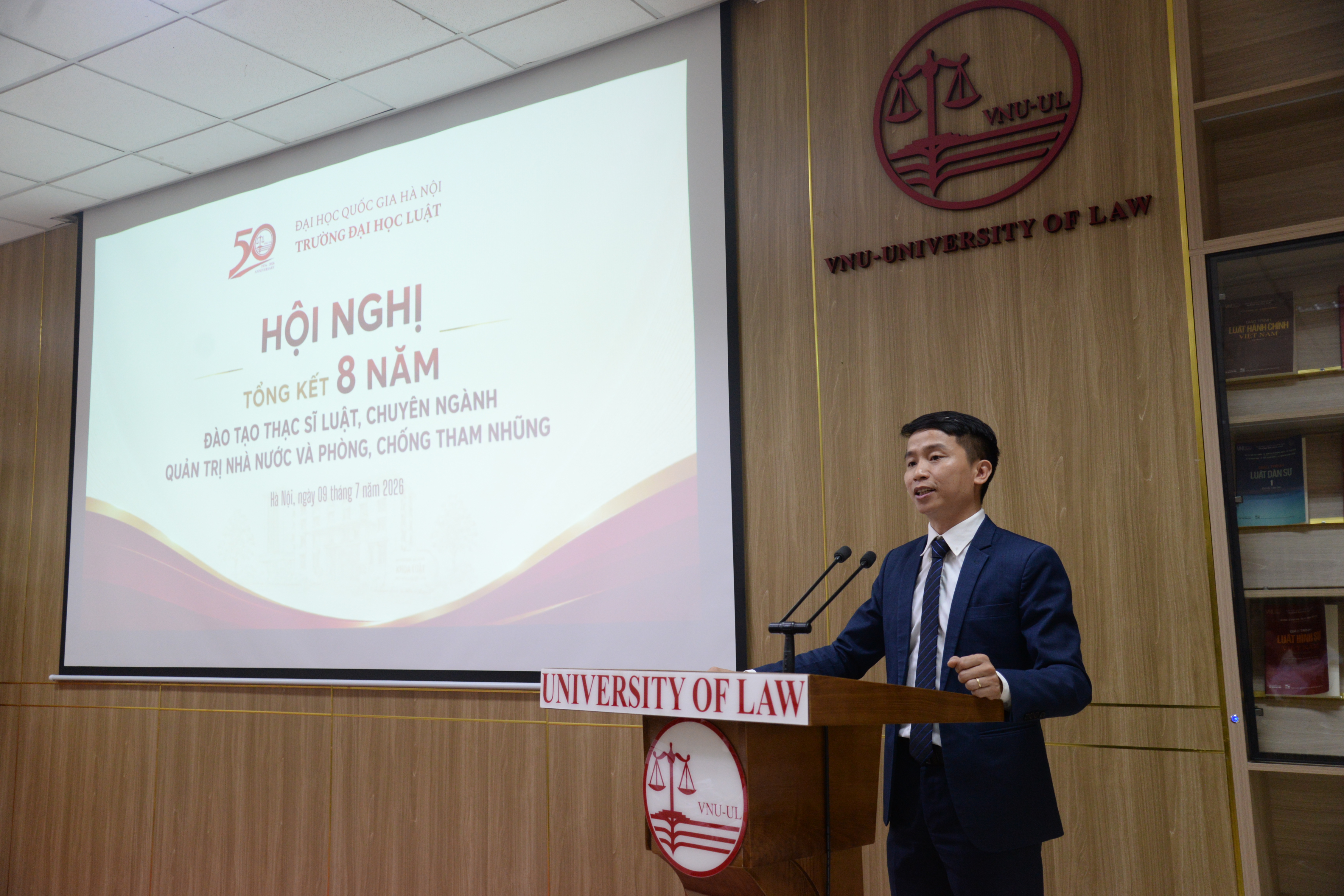
Do Huu Dinh’s presentation, from the alumni perspective, noted that students came from a wide range of institutions, including Party agencies, state administrative bodies, inspection, audit, and procuracy agencies, courts, education institutions, research institutes, and businesses, which he said created a dialogue-oriented learning environment connecting research with public administration practice.
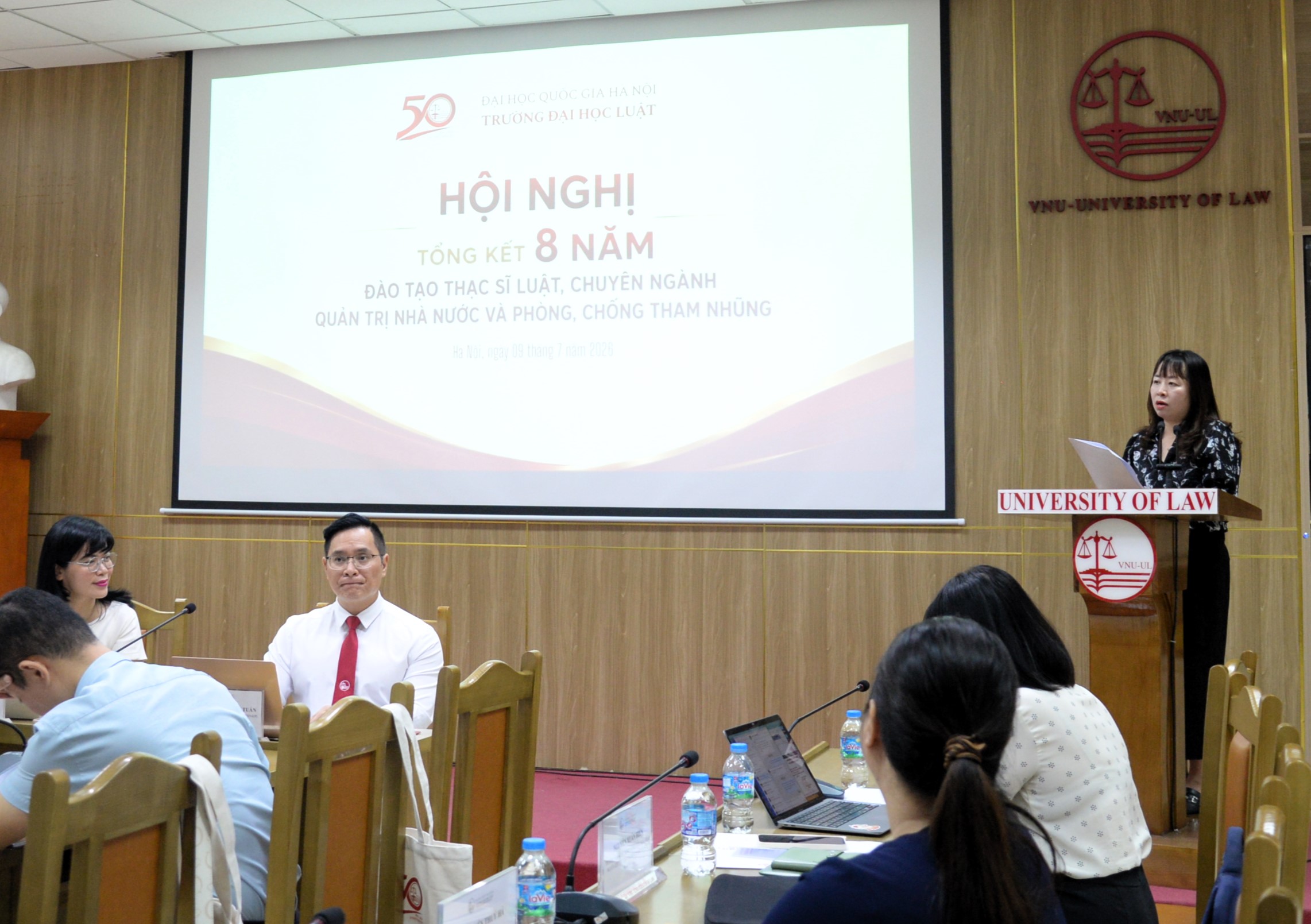 From the employer perspective, Assoc. Prof. Dr. Truong Thi Hong Ha’s presentation addressed the need for qualified personnel in state governance and anti-corruption, noting that current anti-corruption work extends beyond detection and enforcement to prevention, power control, conflict-of-interest management, asset transparency, accountability, public integrity, and technology use in public governance.
According to periodic surveys, 100% of current students said the program met their job requirements, 94.1% of alumni said the training content matched professional practice, and 100% of employers reported that graduates met the required knowledge, skills, and competencies.
The discussion session included comments from the following experts, researchers, and practitioners:
Prof. Dr. Nguyen Dang Dung said the program addresses the core of the issue, arguing that corruption and anti-corruption measures are closely tied to constitutional and administrative law, and that since the abuse of power stems from human nature, prevention should focus on measures suited to that underlying behavior.
Dr. Bui Vu Anh, Deputy Director of the Institute of Digital Training and Testing, described the program as one of the most interdisciplinary at VNU, and noted that the University should continue refining the program’s structure and content, particularly by clarifying its learning outcome statements as a commitment to training quality.
Nguyen Van Thanh, former Deputy Inspector General of the Government Inspectorate, said what impressed him most was the program’s pioneering nature in Vietnam. He noted that debate during its early stages, including over its name, helped clarify the program’s substance and supported its continued development.
Assoc. Prof. Dr. Tran Van Do said Vietnam’s context requires clearer research into the causes of corruption and greater attention to international experience on prevention, including measures to make public officials “unable and unwilling to engage in corruption.”
Dinh Van Minh, former Director of the Legal Affairs Department at the Government Inspectorate, said the program faced significant challenges at its outset but received strong support from relevant authorities and the University. He argued that anti-corruption work needs to expand in scope and methods, and that education is an important tool for shaping individual awareness and public attitudes toward corruption.
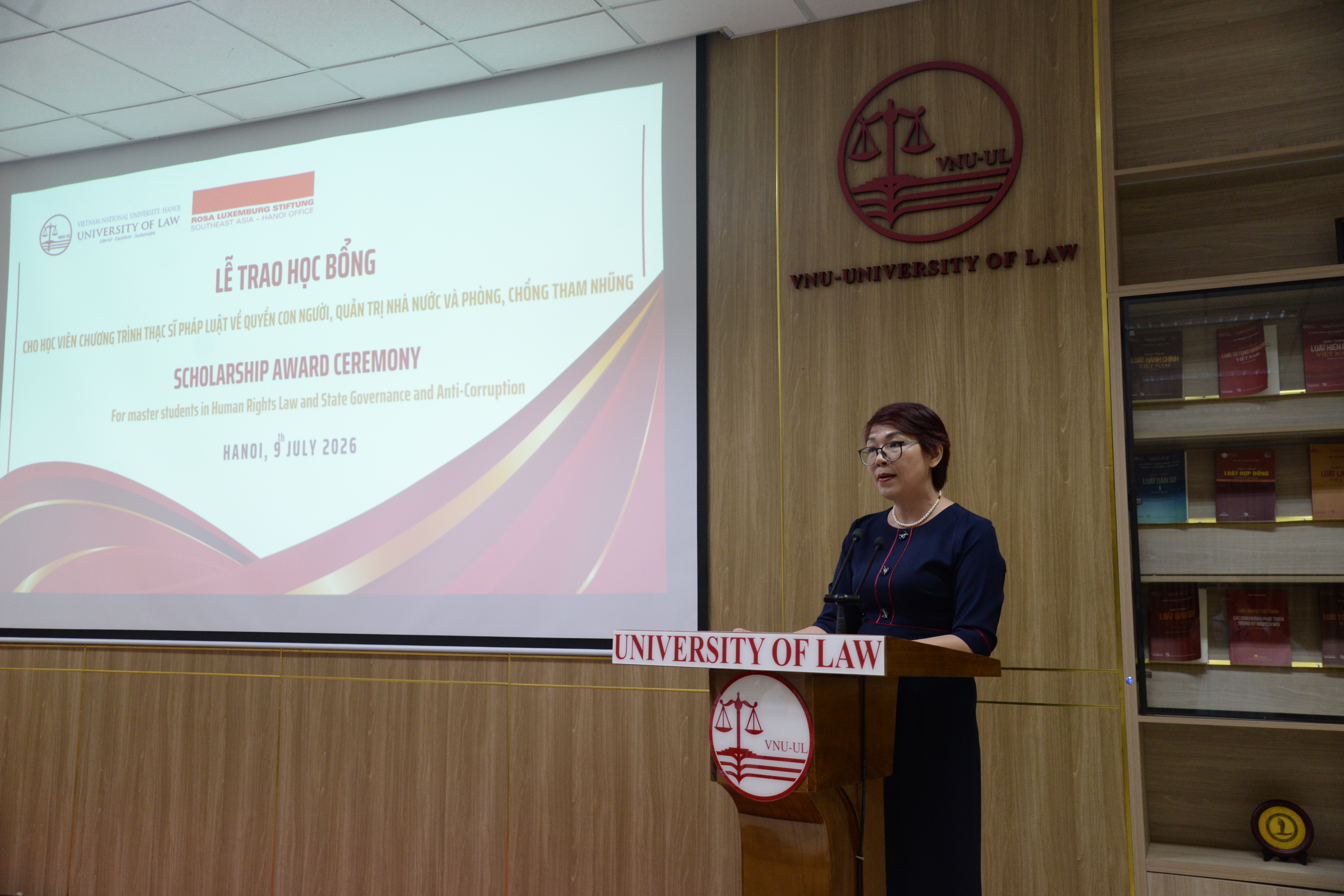
A representative of the Rosa Luxemburg Foundation also spoke and presented scholarships. Trieu Tuyet Mai Huong, the Foundation’s representative in Vietnam, said the Foundation supports equitable and sustainable development and has backed two pioneering programs at VNU University of Law for this reason. She expressed hope that the knowledge gained through the program would extend beyond individual students and the University to broader society, and encouraged students to carry the program’s values into their professional work.
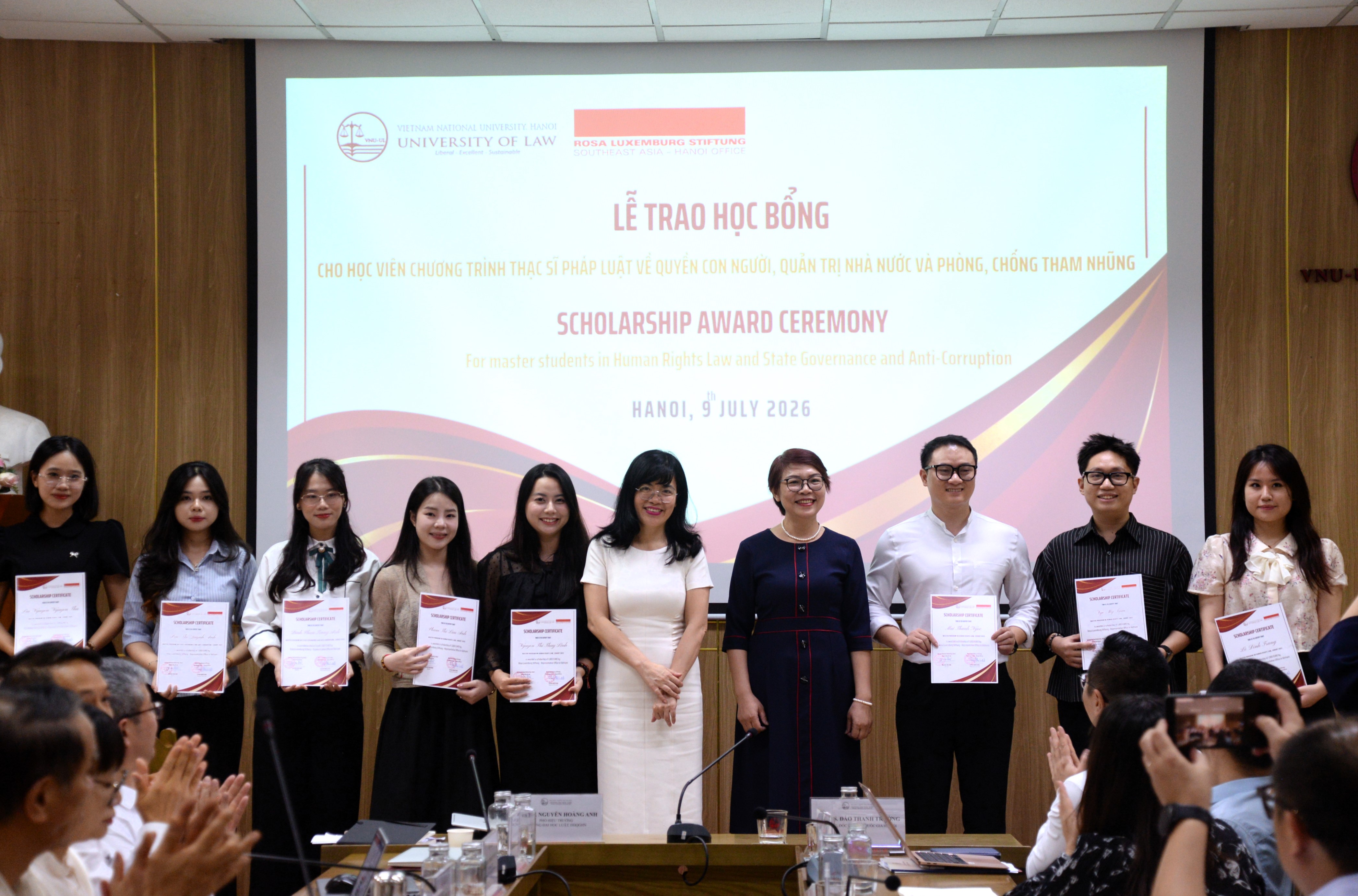
The Rosa Luxemburg Foundation presented scholarships to students currently enrolled in the Master’s Program in State Governance and Anti-Corruption and the Master’s Program in Human Rights Law at VNU University of Law.
Student representative Le Dinh Trung said the program gave students an opportunity to build their capabilities and career prospects, thanked the faculty for developing the curriculum, and said he intended to apply what he learned in practice.
Based on the presentations and discussions, the conference agreed on priority directions for the program’s next phase: continuing to refine its structure and content; strengthening its practical orientation and policy consultation capacity; further developing its interdisciplinary approach built on a legal studies foundation; standardizing textbooks, teaching materials, casebooks, and academic databases; expanding research and publication; furthering internationalization; and developing an alumni network.
The program will continue to incorporate emerging topics such as digital governance, public integrity, conflict-of-interest control, artificial intelligence in corruption prevention, public data transparency, cross-border recovery of corruption-related assets, and anti-corruption in the private sector.